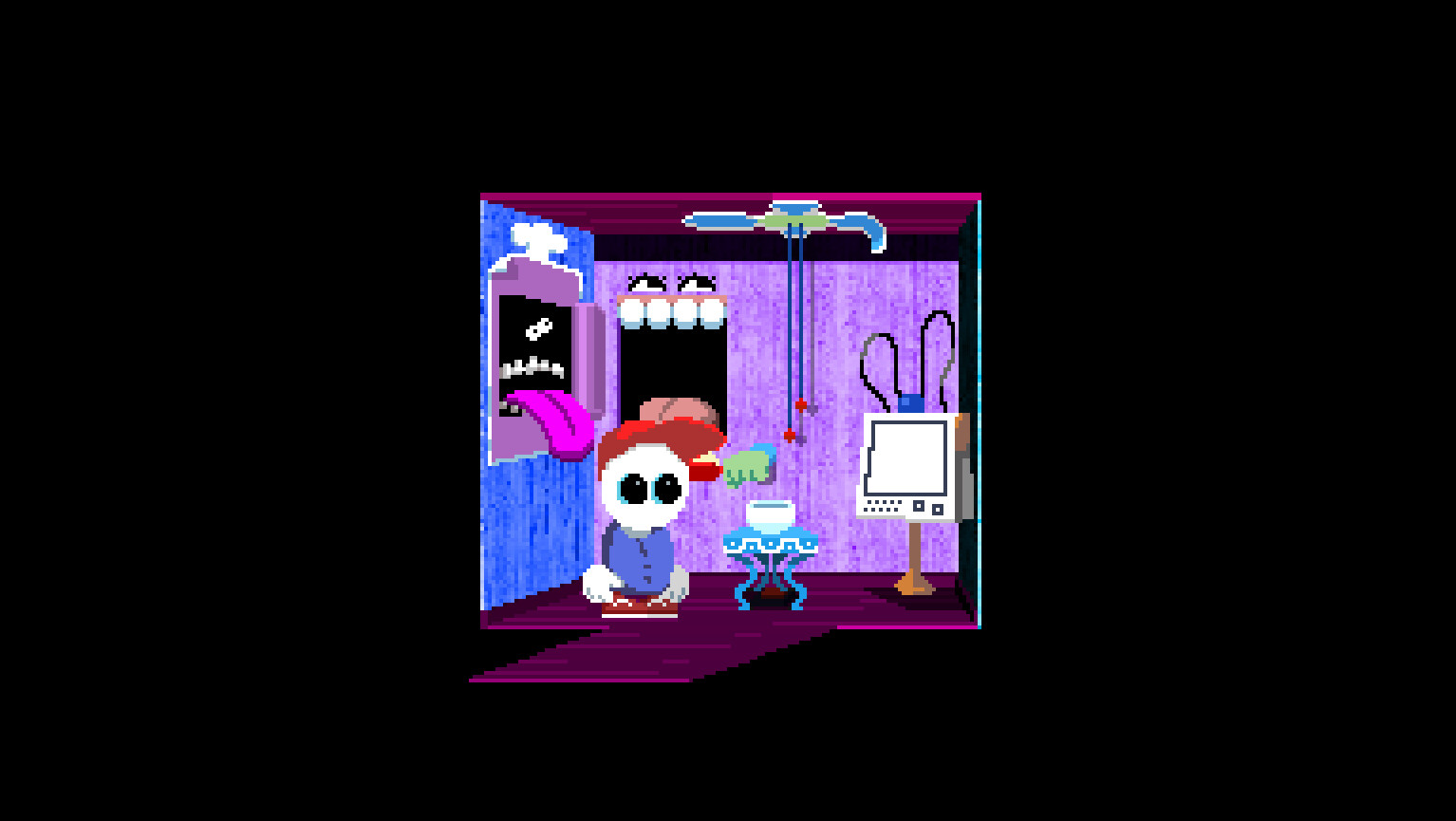
Play Pajama Sam for Endacopia's visual ancestry, Fran Bow for dark child-centered point-and-click storytelling, and Rusty Lake Hotel for compact surreal puzzle design.
Endacopia is hard to match with a single game because its identity comes from a clash. It looks like a colorful early learning adventure, works like a non-linear point-and-click puzzle game, then adds psychological horror, first-person combat, animated jokes, and deliberately unfamiliar rules. The list below therefore matches specific qualities instead of pretending every pick is a clone.
Pajama Sam: No Need to Hide When It's Dark Outside
Best for: The 1990s edutainment look
A genuine 1996 point-and-click learning adventure about a child entering a strange world. It supplies the friendly computer-game vocabulary that Endacopia twists into horror.
How it differs: Pajama Sam is family friendly and reassuring. Choose it for the visual and interaction roots, not for psychological horror.
View the official Steam pageFran Bow
Best for: A child protagonist in a disturbing puzzle world
A creepy point-and-click adventure focused on a young girl, mental distress, and a reality that changes beneath her. It matches Endacopia's mixture of inventory puzzles and dark childhood perspective.
How it differs: Fran Bow is hand drawn and story-forward, with less of the fake educational-software interface.
View the official Steam pageSally Face
Best for: Character mystery and hidden horror
A narrative adventure with a young protagonist, strange neighbors, bonus minigames, and optional mysteries hidden beyond the main route.
How it differs: Sally Face is episodic and side-view, with a heavier focus on dialogue and long-form story.
View the official Steam pageRusty Lake Hotel
Best for: Compact surreal point-and-click puzzles
A dark, eerie puzzle game built around six rooms and a cast of unsettling animal guests. It delivers the same pleasure of testing strange object logic in a world that refuses normal rules.
How it differs: Rusty Lake Hotel is shorter, more contained, and uses static room puzzles instead of free movement and first-person fights.
View the official Steam pageWho's Lila?
Best for: Experimental psychological horror
A reverse-detective point-and-click adventure where you manually control the protagonist's face instead of choosing normal dialogue responses. Its interface is part of the unease.
How it differs: It is more abstract and expression-driven, with none of Endacopia's bright child-game surface.
View the official Steam pageAmanda the Adventurer
Best for: Children's media horror and direct interaction
An attic full of old children's-program tapes becomes a puzzle box when the characters appear to address the player. It shares Endacopia's cheerful-media shell and hidden threat.
How it differs: Amanda uses first-person rooms and VHS episodes rather than a roaming point-and-click world.
View the official Steam pageWhich game should you play next?
| You want more retro edutainment | Pajama Sam |
|---|---|
| You want inventory horror | Fran Bow |
| You want character mystery | Sally Face |
| You want compact surreal puzzles | Rusty Lake Hotel |
| You want experimental interfaces | Who's Lila? |
| You want corrupted children's media | Amanda the Adventurer |
How these recommendations were chosen
We compared each game's official store description, interaction style, subject matter, and visual framing with Endacopia. A match needed at least two meaningful overlaps. Review scores and current prices were not used because both change over time and do not explain why a game feels similar.
These are editorial recommendations, not claims of influence. The direct creative comparison on AndyLand's original itch.io page is a playtester description that combines Pajama Sam and Petscop. Petscop is a web video series rather than a retail game, so this list starts with the playable Pajama Sam side of that comparison and then covers other puzzle-horror directions.